Quick Answer
Use a mobile mechanic for suitable diagnostics, batteries, routine servicing and many straightforward mechanical repairs where there is a safe place to work. Choose a garage for MOT testing, alignment, major underbody work, complex dismantling and repairs that need workshop-only machinery.
Do not choose solely on an assumption that mobile work is always cheaper. Compare the scope, parts, warranty, call-out arrangements and whether the job can realistically be completed on site.
What a mobile mechanic can do
A mobile mechanic can inspect or repair a vehicle at your home or workplace, while a traditional garage provides a fixed workshop with lifts, specialist equipment and controlled working conditions. Neither option is automatically better; the right choice depends on the job, vehicle and location.
Mobile service is particularly convenient when the car will not start or when you want routine work completed without travelling. A garage is often more suitable for repairs that need a lift, heavy equipment, extensive dismantling or a controlled workshop environment.
Capabilities vary significantly between technicians and vans, but common mobile services can include:
- diagnostic scanning and fault assessment
- battery testing and replacement
- routine servicing
- some brake repairs
- starter and alternator work on suitable vehicles
- minor suspension components
- pre-purchase inspections
- non-start diagnosis
- selected sensors and electrical repairs
The mechanic should decide whether the job is safe and practical at your location. A repair that is possible in a fully equipped workshop may not be appropriate on a sloping drive or busy road.
What a garage is better equipped for
Garages typically have vehicle lifts, tyre machines, alignment rigs, extraction, compressed air, secure parts storage and heavier tools.
They are usually better suited to:
- clutch or gearbox removal
- significant exhaust or underbody work
- wheel alignment
- tyre fitting and balancing
- complex suspension work
- jobs requiring long diagnostic observation
- major engine repairs
- air-conditioning work needing specialist equipment
- MOT testing at an authorised test station
Some mobile businesses carry specialist equipment too, so ask what is actually available rather than assuming from the business model.
MOT testing is a specific case
An MOT must be carried out at an authorised MOT test station using approved equipment and procedures. A mechanic can prepare a car for an MOT or take it to a station where arrangements allow, but an ordinary driveway visit is not itself an MOT test.
If your MOT is approaching, see our guide to what to expect during an MOT test.
Convenience
Convenience is the strongest argument for mobile work. You can often remain at home or work while the vehicle is serviced, and a non-starting car may be diagnosed without arranging recovery first.
However, access matters. The mechanic may need a flat, safe, legal working area with enough room around the vehicle. Underground car parks, permit-controlled streets, soft ground or narrow roads can limit what can be done.
Tell the mechanic about access when booking rather than assuming any roadside location is suitable.
Weather and working conditions
Outdoor repairs depend on weather and light. Heavy rain, strong wind, snow or extreme temperatures can make some work unsafe or affect products and diagnostic equipment.
A garage provides a controlled environment and can keep a partially dismantled vehicle secure overnight if parts are delayed.
A professional mobile mechanic should reschedule or change the repair plan when conditions are not appropriate rather than continue simply because the appointment exists.
Diagnostics: mobile can be very effective
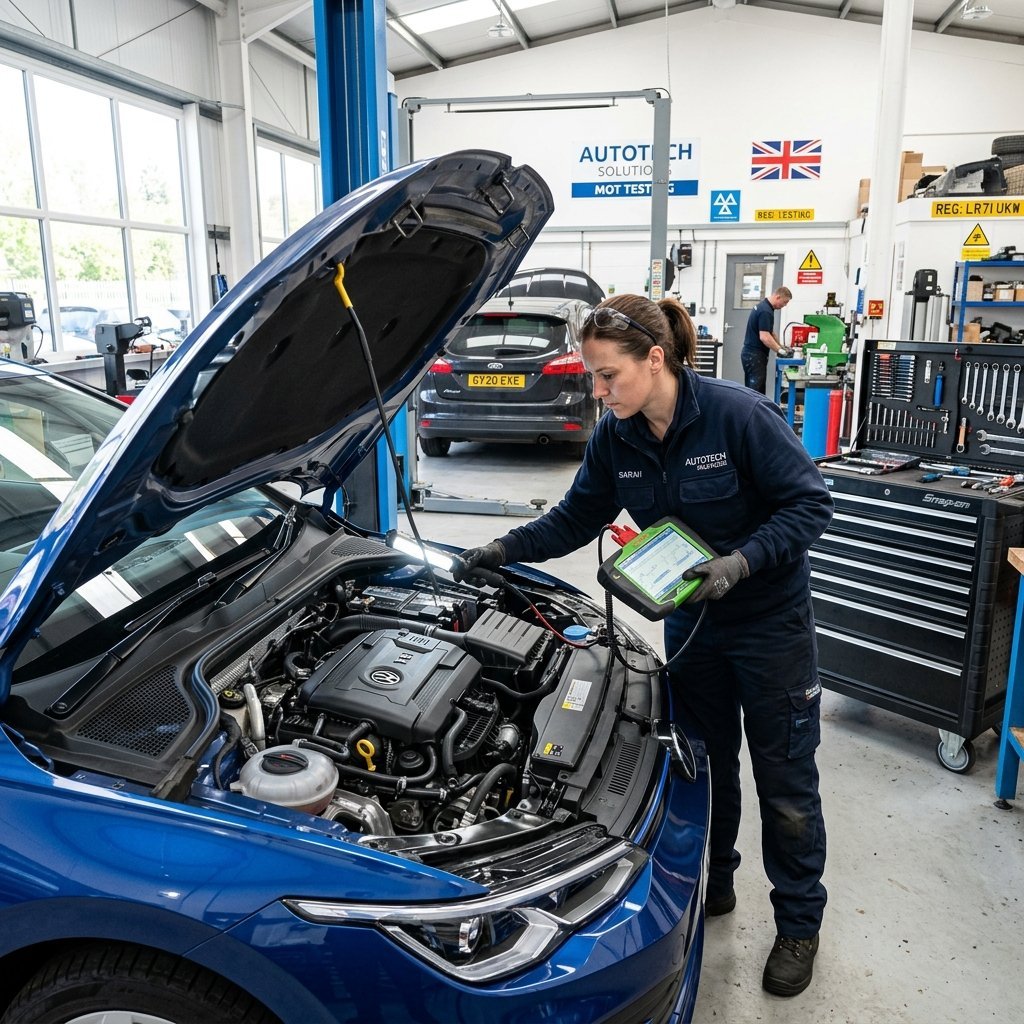
Many modern diagnostic tasks can be performed on site using scan tools, multimeters, oscilloscopes and other portable equipment.
Mobile diagnosis can be particularly useful for a car that will not start. The technician can determine whether the issue relates to battery condition, starter circuit, fuel delivery, immobiliser, sensors or another system before unnecessary parts are replaced.
However, diagnostic scanning is not the same as diagnosis. A fault code is evidence, not always the failed component. Choose a technician who can interpret data rather than simply read codes and recommend whatever part is named.
Battery replacement
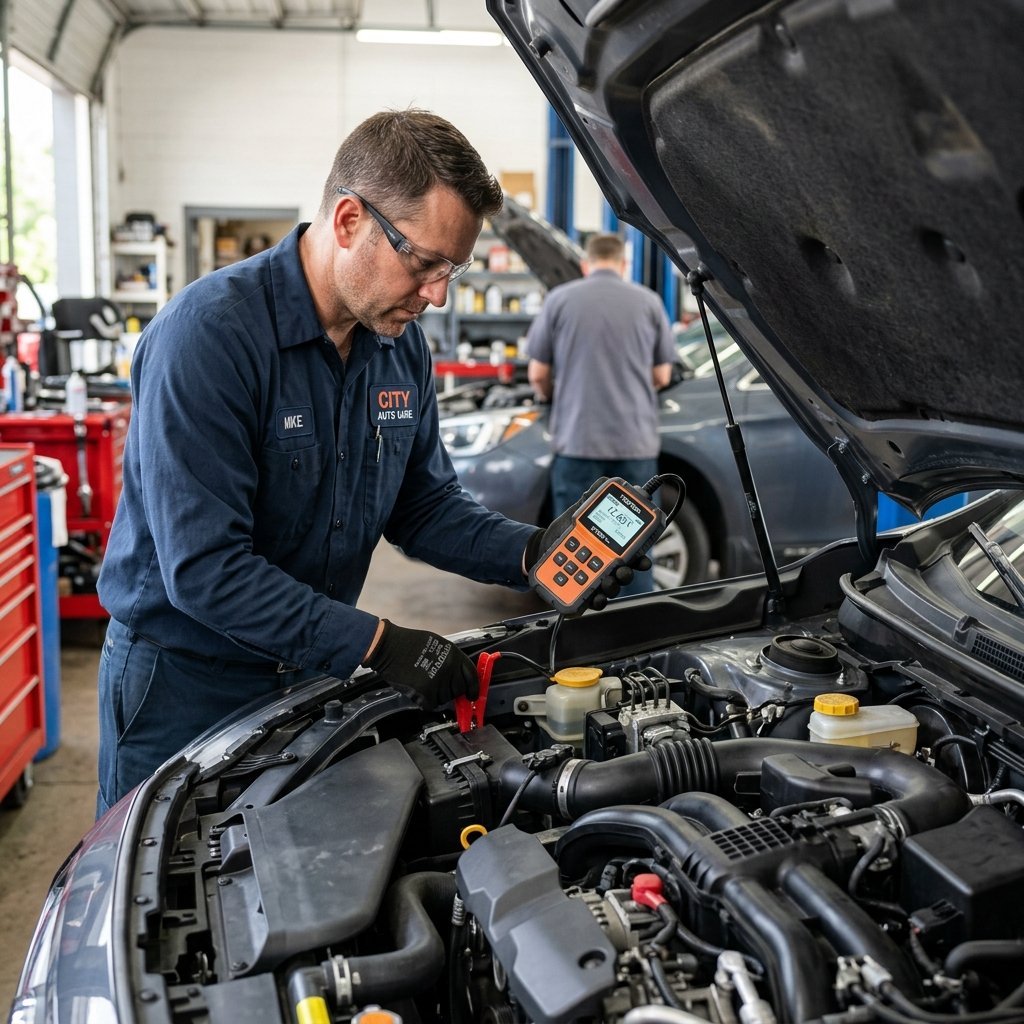
Battery work is well suited to mobile service because the vehicle may be unable to start.
A competent mechanic should verify the battery specification and consider whether charging-system testing or battery coding is required. Our guide to car battery maintenance and replacement explains why repeated flat batteries should not automatically be treated as a battery-only fault.
Brake work
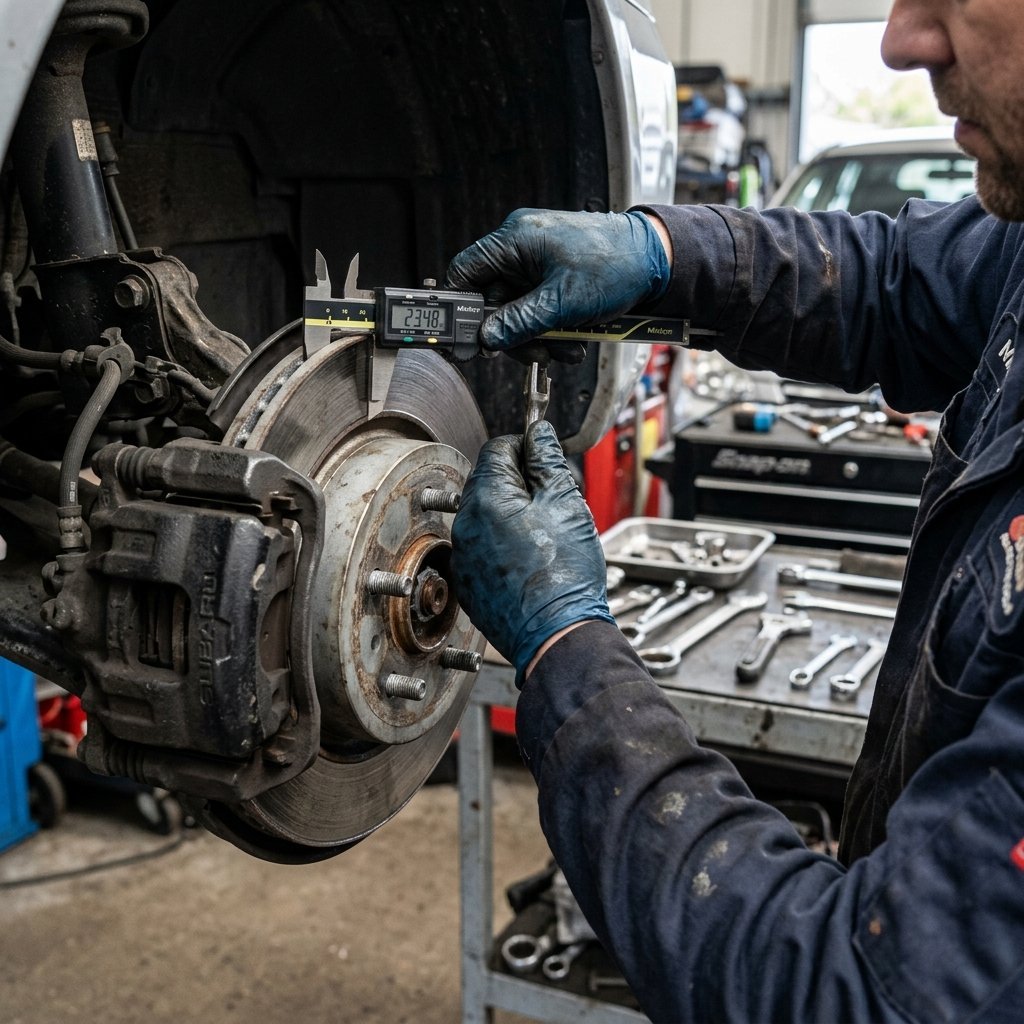
Some brake-pad and disc replacements can be completed safely on a suitable private driveway with professional lifting equipment and correct procedures. Other brake problems need a lift or further workshop diagnosis.
If the vehicle has severe brake symptoms, do not drive it to save the cost of a call-out. Our guide to signs of brake wear explains when recovery may be more appropriate.
Servicing at home
Routine servicing can be convenient on a driveway, provided the mechanic can dispose of waste fluids and parts correctly and complete the vehicle-specific service procedure.
Ask what is included. “Full service” and “interim service” are marketing terms that can vary between providers. A good quote should list the oil specification, filters, checks and diagnostic/service-reset work included.
The work should follow the manufacturer schedule where maintaining service history is important.
Can mobile mechanics preserve manufacturer warranty?
Vehicle-warranty arrangements depend on the manufacturer, age, contract and work completed. UK competition rules can allow independent servicing without automatically invalidating a new-car warranty when required specifications, parts and records are followed, but individual warranty claims can still depend on evidence and terms.
If the car is within a manufacturer warranty or service plan, check the exact conditions before booking. Keep itemised invoices and parts specifications.
Do not rely on a blanket promise that any independent repair can never affect a warranty.
Comparing price fairly
A mobile mechanic has different overheads from a fixed garage, but that does not guarantee a lower total price. Travel time, call-out charges, parts sourcing, specialist equipment and location all affect the quote.
Compare:
- labour included
- parts brand/specification
- call-out fee
- diagnostic fee
- VAT where applicable
- disposal charges
- warranty terms
- what happens if the job cannot be completed on site
- whether follow-up workshop work is required
A lower initial diagnostic fee can become poor value if the technician cannot perform the necessary follow-up repair.
Parts and availability
Garages often hold common service items, while mobile technicians may order parts specifically for the appointment. Either model can work well when the vehicle details are confirmed accurately.
If diagnosis is uncertain, avoid authorising a list of “possible” parts simply to ensure the van brings everything. Good fault finding should reduce guesswork.
For older or unusual cars, a garage may offer more secure storage if the vehicle must remain dismantled while a part is sourced.
Safety of the work location
A mechanic needs room to work without creating danger for themselves, the customer or other road users.
A suitable site is generally:
- level and firm
- off the live carriageway where possible
- large enough to open doors and use lifting equipment
- free from deep gravel or unstable surfaces for lifting
- not blocking pedestrians or neighbours
- accessible to the service vehicle
Some jobs cannot be safely completed at the kerb. Accept that as a sign of professional judgement, not poor service.
How to choose a mobile mechanic
Check:
- business identity and contact details
- relevant experience with your vehicle/job
- insurance
- qualifications or trade memberships where relevant
- written quote or diagnostic terms
- parts and labour warranty
- payment method
- reviews that describe actual work completed
For high-voltage EV work, ask whether the technician has appropriate EV training and equipment. A general mechanic should not work on traction-battery systems without the necessary competence.
How to choose a garage
Consider similar factors plus:
- workshop security
- specialist equipment
- MOT authorisation if required
- manufacturer or marque experience
- collection/delivery options
- diagnostic capability
- storage charges if the car remains on site
A clean reception area is not evidence of technical quality, just as a well-branded mobile van is not a substitute for competence. Ask specific questions about the job.
Hybrid approach
Sometimes the best process uses both. A mobile mechanic may diagnose a non-starting vehicle at home, then recommend recovery to a workshop for a repair needing a lift. A garage may also use mobile technicians for battery or fleet work.
The important thing is continuity of diagnosis and clear communication about what happens next.
Proper Trades can help connect drivers with mechanic services across the Midlands for mobile and workshop-based work depending on the repair.
Proper Trades connects homeowners and businesses across the Midlands with contact our team.
Frequently asked questions
1. Are mobile mechanics always cheaper than garages?
No. Their overhead structure is different, but travel, call-out time, equipment and job type affect price. Compare the complete written scope rather than assuming one model is automatically cheaper.
2. Can a mobile mechanic do an MOT at my house?
An MOT must be carried out at an authorised test station. A mobile mechanic can help with preparation or other repairs but cannot turn an ordinary driveway into an MOT station.
3. Can a mobile mechanic replace brakes on my driveway?
Often, where the repair and work area are suitable. The mechanic needs stable ground, safe lifting equipment and enough access. More complex brake or underbody work may need a garage.
4. Is mobile servicing valid for service history?
Independent servicing can be documented with itemised invoices and correct parts/specifications. If the vehicle is under manufacturer warranty, check the specific warranty and service requirements before booking.
5. What if the mobile mechanic cannot finish the job?
Ask before booking how escalation works. The mechanic may return with parts, refer the vehicle to a partner garage or recommend recovery. Clarify whether additional call-out or diagnostic charges apply.
6. Is a garage better for diagnostics?
Not automatically. Skilled mobile technicians can carry advanced portable diagnostic equipment. A garage has an advantage when testing requires a lift, prolonged observation or workshop-only equipment. Technician skill is more important than location for many diagnostic tasks.
Need Professional Help with Your Project?
Proper Trades connects you with vetted, qualified trade specialists across the Midlands. Tell us your requirements, and we will review your project and present a single clear quote.
Enquiry Received
Thank you. We will review your project and get in touch shortly.